
Nail Care Tips
Can You Shower or Wash Dishes With Press-On Nails?
May
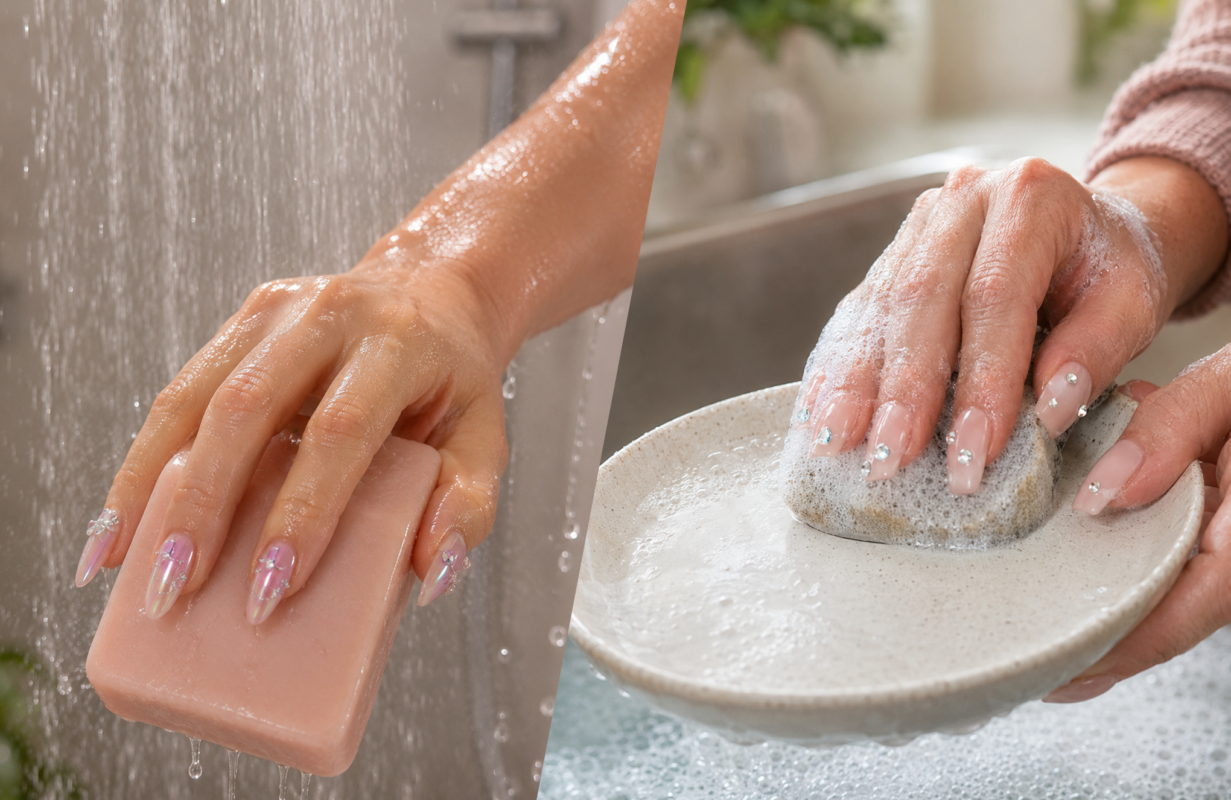
Yes, you can shower or wash dishes with press-on nails, but a little care makes a big difference. Water itself is not always the problem. The real issue is soaking, heat, and moisture getting under the nail before the glue has fully set.
Press-on nails are made for real life. You should be able to wash your hands, take a shower, and go through your normal routine without worrying about every little splash of water.
That said, press-ons are not meant to be soaked for long periods, especially right after application. If water gets underneath the nail or the glue has not had enough time to bond, your nails may start lifting sooner than expected.
The good news is that you do not need to avoid water completely. You just need to know when to be careful, how to protect your manicure, and what to do if one nail starts to feel loose.
What to Know About Water and Press-On Nails
Press-on nails can handle normal water exposure, but they last longer when you avoid soaking them too often. Think of them as water resistant, not completely waterproof.
A quick hand wash is usually fine. A short shower is usually fine too. Long baths, hot tubs, swimming, and dishwashing without gloves are more likely to weaken the glue over time.
- Short water exposure is usually okay.
- Long soaking can weaken nail glue.
- Hot water and steam may make lifting happen faster.
- Water trapped under the nail can affect wear time.
- Freshly applied press-ons need extra time before water exposure.
How to Shower or Wash Dishes With Press-On Nails
You do not need a complicated routine. These simple habits can help your press-on nails stay secure and look fresh for longer.
Step 1: Let the Glue Set First
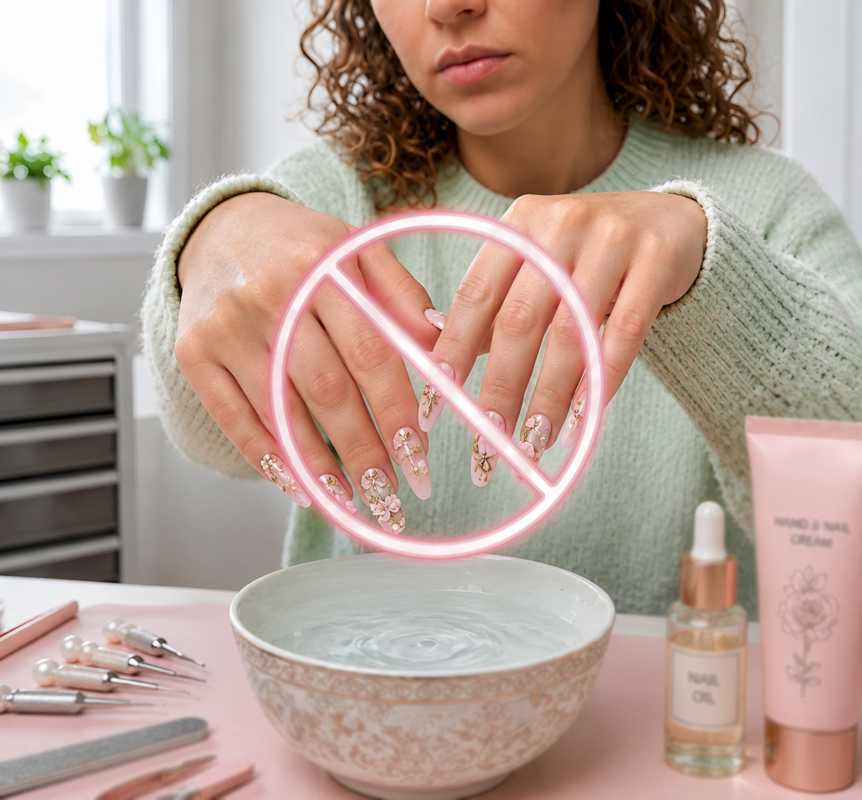
After applying press-on nails, avoid showering, washing dishes, swimming, or soaking your hands right away. Fresh glue needs time to bond properly.
If you expose your nails to water too soon, the edges may lift faster, even if the application looked perfect at first.
Step 2: Keep Showers Short and Gentle
A normal shower is usually fine with press-on nails. Try not to keep your nails under hot water for too long, and avoid using your nails to scrub, scratch, or open product caps.
After showering, gently pat your hands and nails dry. Pay attention to the sides and cuticle area where moisture can sit.
Step 3: Wear Gloves When Washing Dishes
Dishwashing is harder on press-on nails than a quick shower because it often involves hot water, soap, pressure, and longer soaking. If you want your press-ons to last, gloves are your best friend.
Rubber gloves help protect the glue bond and keep water from sitting around the edges of your nails.
Step 4: Avoid Soaking Whenever Possible
Try to avoid long baths, hot tubs, or swimming for extended periods while wearing press-on nails. A little water is fine, but long soaking can slowly loosen the adhesive.
If you do swim or soak your hands, dry your nails carefully afterward and check for any lifting around the edges.
Step 5: Check for Lifting Before Reapplying Glue
If one nail starts to feel loose after water exposure, do not just add more glue on top. Remove the nail gently if needed, clean and dry the area, then reapply it properly.
Gluing over moisture or old glue can make the nail pop off again quickly.
Common Mistakes to Avoid
If your press-on nails keep lifting after showers or dishwashing, one of these habits may be the reason.
Final Tips for Longer-Lasting Press-On Nails
You can absolutely live your normal life with press-on nails. The key is to avoid long soaking, protect your hands during chores, and give your glue enough time to set before water exposure.
If you want your manicure to last longer, start with good nail prep. Clean, dry nails make a stronger base for glue or adhesive tabs. After application, be gentle with your hands for the first few hours and keep your nails as dry as possible.
For everyday wear, small habits matter most: wear gloves when washing dishes, pat your nails dry after showering, and avoid using your nails as tools. With the right care, your press-on nails can stay beautiful through your daily routine.